


What to do if you are diagnosed with dorsopathy? This word sounds quite frightening, but in fact it describes one of the most common “disorders” of the body. Most medical terms come from the Latin language. On it, “dorso” means back, and “pathos” means disease.
What is dorsopathy?

It turns out that such a diagnosis speaks of some unspecified back problem without specifying the cause, exact localization and severity. However, from the point of view of medicine, this formulation is the most correct. Its synonym is non-specific back pain, which is observed in 80% of patients.
The doctor makes a similar diagnosis after excluding dangerous conditions – the so-called “red flags”. If according to the examination, tests, and if necessary, MRI or CT results, a dangerous cause of pain has not been determined, treatment is carried out using an effective protocol. According to international standards, in most patients it is not necessary to look for the source of the problem (hernias, protrusions, osteochondrosis), since it will not affect the further treatment at all.
Types of disease
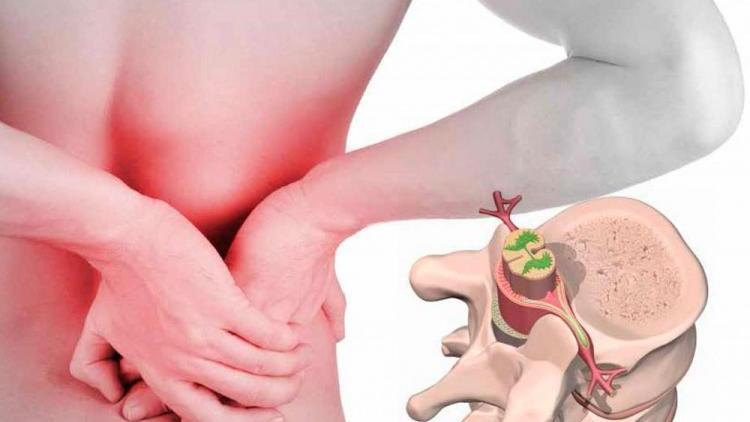
What causes pain in the back with dorsopathy? As we clarified above, the diagnosis is made after exclusion of tumors, radiculitis, fractures and implies a safe type of disease. Most nerve receptors of the back are located in the joints, ligaments and muscles – stabilizers of the spine.
Injuries, chronic overloads, and inflammatory processes can lead to irritation of painful endings. Degeneration or damage to the vertebrae, their joints, muscles and ligaments occur in a complex manner, that is, all components of the back are affected. In one case or another, pathologies of various structures may prevail, which is described by the following terms:
- Osteochondrosis is everyone’s favorite term, as vague as “dorsopathy”. Means wear and tear of the bone, disc and cartilage of the vertebra.
- Spondyloarthrosis – damage to small intervertebral joints
- Spondylosis – degeneration of the intervertebral disc and the bone adjacent to it.
- Ligamentosis – “ossification” of ligaments due to constant overload and imbalance.
- Trigger points are the most common cause of back pain. Small areas of local spasm of overworked muscles.
A few years ago, the typical medical history of a patient with pain was filled with all these terms, but today it is increasingly abandoned. Long, wordy diagnoses only upset a person, and in this case, they do not affect the treatment at all. The terms “dorsopathy” and “non-specific back pain” most accurately describe the modern view of the problem and cause less anxiety.
Reasons
Mechanical wear and tear of cartilage, discs, and vertebrae begins to some extent already at 20-30 years of age. This is a natural manifestation of the evolution and aging of the body. However, for some the problem is complicated by pain, and for some it is not. Given the fact that all components of the vertebrae are components of the musculoskeletal system, it is the motor and support imbalances that contribute to the intensive development of dorsopathies.
A healthy spine is arranged in such a way that all loads are compensated along with elasticity mechanisms. They include:
4 bends (2 lordosis and kyphosis), working as a spring.
A uniform pull of the muscles “pulls” the body, like the ropes of a tent or a telegraph pole.
The pressure of the air cushion of the thoracic and abdominal cavities “supports” the spine from the inside.
If all mechanisms work “like a clock”, even extremely worn joints will be minimally painful. X-rays of some professional athletes can scare even a doctor, but strong and balanced muscles fully compensate for bone and cartilage instability. At the same time, in young people who are not very active, the pain can be incredibly strong even against the background of a “perfect” picture.
The most common causes of back pain include a number of conditions that disrupt the protective mechanisms of the spine. To one degree or another, they are relevant for all people living in the modern world:
Frequent rest or work in a sitting position. In the sitting position on ordinary chairs or armchairs, the curves are smoothed, the muscles and ligaments of the spine are stretched. In addition, the relaxation of the abdominal muscles excludes the maintenance of intra-abdominal pressure, and causes protrusion of the intervertebral discs.
Weight lifting “back”. When bending, the center of gravity shifts, which dramatically overloads the muscles. There are tears of fibers, their death and replacement by connective tissue or bone.
Sleep in an uncomfortable position. The back is most vulnerable when its muscles relax. Unnatural positions of the spine disrupt its nutrition, stability and health.
How to treat dorsopathy?
The basis of modern treatment of back pain is the normalization of living and working conditions in combination with physical rehabilitation. And only if these measures do not show effectiveness for more than a month and a half, the doctor can prescribe more aggressive procedures: injections, pills or even surgery.
The main thing to understand: the diagnosis of “dorsopathy” usually means a favorable prognosis and the absence of dangerous conditions. Treatment does not always give a quick result, besides, there is no single “magic pill” for back pain yet. Most doctors have successfully treated patients, which indicates the effectiveness of such treatment:
- Short-term (1-3 days) reception of modern non-steroidal anti-inflammatory drugs as prescribed by a doctor.
Electroneurostimulation is a physical procedure that replaces taking pills and has a pleasant relaxing effect. - Use of Lyapko mats and other needle massagers.
- Replacement of sleeping pillows with orthopedic ones, purchase of special pillows for sitting.
- Exercises developed by a rehabilitator help to relax or strengthen muscles at various stages.
- Orthopedic belt – helps to start effective exercises or work immediately, instead of lying with back pain for several days. They are also useful for the prevention of dorsopathy and “insurance” during sports or heavy work.